
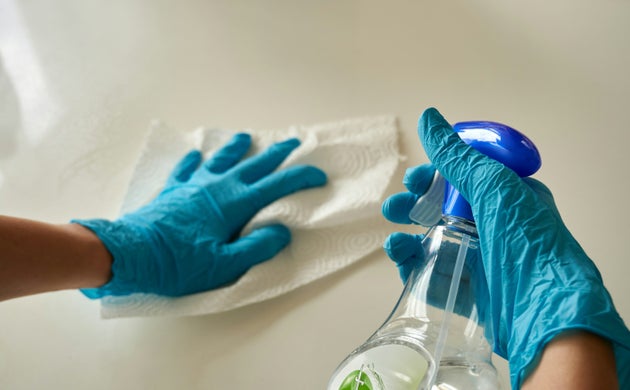
 Person cleaning
When it comes to work, mums are damned if they do and damned if they don’t.
Those who work in the home (and yes, childcare and housework are very much “real” labour) often feel judged for being “spoiled,” while mums who work for a company can face professional prejudice alongside exhausting hours.
Whether they work in the home or outside of it, mothers are far more likely than fathers to shoulder the bulk of the emotional and cognitive load.
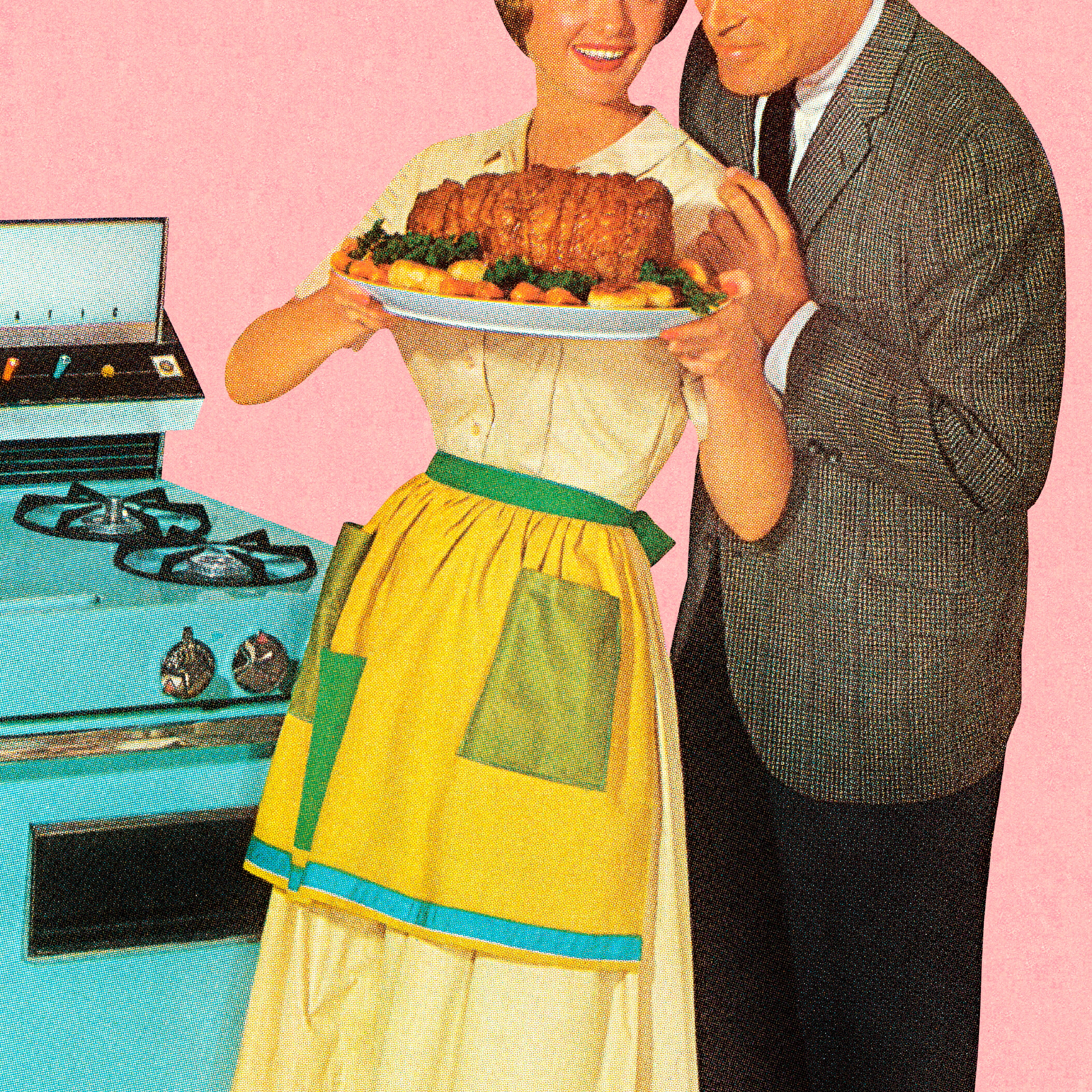
But the term “tradwife” is often used to refer to a woman who “embraces traditional gender roles” as a part of an online, “ultraconservative” performance, Merriam-Webster explains; not a regular stay-at-home mother.
A “tradwife” will often create content or speak about her role as a homemaker online, sharing the joys of not working while pocketing thousands in brand deals.
An example is Ballerina Farm, the full-scale production team behind which is overseen by Hannah Neeleman, wife of a billionaire’s son.
The cosy, “cottagecore” aesthetic of her supposedly “rustic” life is more reminiscent of Marie Antoinette’s pirouetting around her toy hamlet than it is of real-life stay-at-home-mother chaos – I know. I have cleaned for women playing into a similar fantasy.
The brand of “not working” is simply too much work for many “tradwives” to sustain
Speaking on BBC Woman’s Hour, “traditional housewife” and influencer Charlie Gray admits that she relied on au pairs – “we had three children under the age of two, and it was crazy,” she says.
I sympathise. My own mother had two sets of twins with 18 months between us – but though she did not have a job, I don’t think she’d quite qualify for “tradwife status” now, not least because paying for an au pair was out of the question.
“Tradwives” don’t just raise kids at home. Theirs is a highly stylised, highly performative (Gray confesses she doesn’t smile as much while cutting onions in real life as she does for the camera) show that relies on a level of labour most women cannot achieve alone.
When I was a cleaner (slash housekeeper, slash au-pair), I worked for women who fed into a proto-tradwife myth. I
They put on a Bree Van De Kamp-level display of homemaking skills, proving to everyone that not only did they not have to go to (paid) work, but that they were the best, the most efficient, the most perfect at not working.
Behind the scenes, I was scrubbing long past my stated hours, polishing doorknobs, cleaning up their botched attempt at focaccia (they would later buy one and fob it off as their own), deep-cleaning grout, and vacuuming sofas.
This was not always enough. Those obsessed with projecting a “picture-perfect” housewife image would encourage a more humiliating routine, using the job I needed to survive to enhance the performance of their optional work.
Once, I was tasked with laying out pre-weighed, pre-chopped ingredients so they could “make” their dinner in front of their friends, hair and clothes still immaculate (which would be fine if it was my job, but it wasn’t).
Dolly Parton says it costs a lot to look cheap. I learned it takes a lot of uncredited labour to look breezily, effortlessly “into” homemaking – work only well-off women could afford.
None of this is to insult stay-at-home parents or housewives
This is not to say these “tradwife” women didn’t work hard, or that this agonised display was not the result of internalised misogyny or double standards.
But I always think – what about the women who clean their houses? What about when they get home to a less-than-picture-perfect house and an exhausting “second shift”?
My own mum, who was on benefits, did not feel the urge to put on the show of rustic contentment that most “tradwives” do: she complained about her housework a lot, because it was hard and exhausting.
I don’t think her experience would have fit into “tradwife” content, despite technically being a homemaker first of all, because the lives of those without stacks of cash are necessarily filled with compromises, shortcuts, and stress.
Having been a part of creating even quite a low-level, pre-virality “tradwife” fantasy for others, I can assure you most of us simply cannot afford to live the preened, painstakingly “curated” lives shown to us online.
They are either a complete myth or a cleverly-positioned gawk at a very rich woman’s hobby.
The sooner we remember that, the better.
Related…


,
Read More
HuffPost UK – Athena2 – All Entries (Public)